What I learned from my third year as a Physics Major
I recently finished my 3rd year as a physics major. This school year was one filled with many difficult, yet valuable lessons. From re-integrating after a summer of backpacking, my first heartbreak, a deep sense of loneliness, adding a double-major… etc. As usual, a table of contents is given down below. Feel free skipping to whichever part sounds most interesting to you, or read everything for a full picture.
Table of contents
- My 3rd year experience
- Tips & Lessons
- Educational journey & life path
- Study lessons
- Coping & self-care
My 3rd Year Experience
This school year I stuck to my 4 class per semester rule. My first semester was a slight shock, as I had been backpacking in Peru for 2 months beforehand. The fall semester consisted of 1 normal physics course, 1 physics lab course, 1 Biology course, and 1 Earth science course. Then in winter I took 2 physics courses & 2 biology courses.
My physics courses were “Quantum Elements” (aka intro to the introduction of Quantum Mechanics), and a “3rd Year Astrophysics Lab” in first semester. Then “Mathematical Physics” and “Modern Physics II” in second semester. Third year Physics courses are usually where stuff starts getting really intense. Problem sets take a serious amount of time, even while taking only half the recommended physics courses per semester, it’s still extremely time consuming. Those doing full course-loads are fully consumed by their courses and usually drowning.
Quantum Elements was a course with really interesting content, but poor delivery. Luckily Griffiths has a good intro Quantum textbook that I relied on. Content included operators, the Schrödinger equation, Formalisms, Commutation of operators, infinite & finite well problems, spin states and a brief overview of splitting energy levels. I found most of these concepts incredibly difficult to conceptually understand… especially anything relating to linear algebra. This is something I wanted to explore this summer before I take “Introduction to Quantum Mechanics” this upcoming fall. The 3rd Year Astrophysics Lab was hands down the hardest physics course I’ve taken so far. It consisted of 1 mini lab report, and 2 mega-lab reports alongside 2 lab presentations. The expectations for these labs were enormous. We were expected to thoroughly research the theory and apparatus functions for each experiment. Completing all the expected work included around 50–100 pages of textbook reading, reading multiple research papers, and writing a detailed theory section with minimum 3 academic sources and multiple self-drawn figures for additional explanation. This was per experiment… it was a time sink. Lab reports were between 20–40 pages, our analysis consisted of code 120–300 lines long, and we had to crunch most of this information into a 10 minute lab presentation. It was an intellectual marathon. But it taught me how to condense down a lot of information when writing & speaking, how to manipulate large datasets (up to 64 GB’s), how to thoroughly research physics topics, and I also picked up a variety of Latex tricks for writing lab reports in Overleaf.
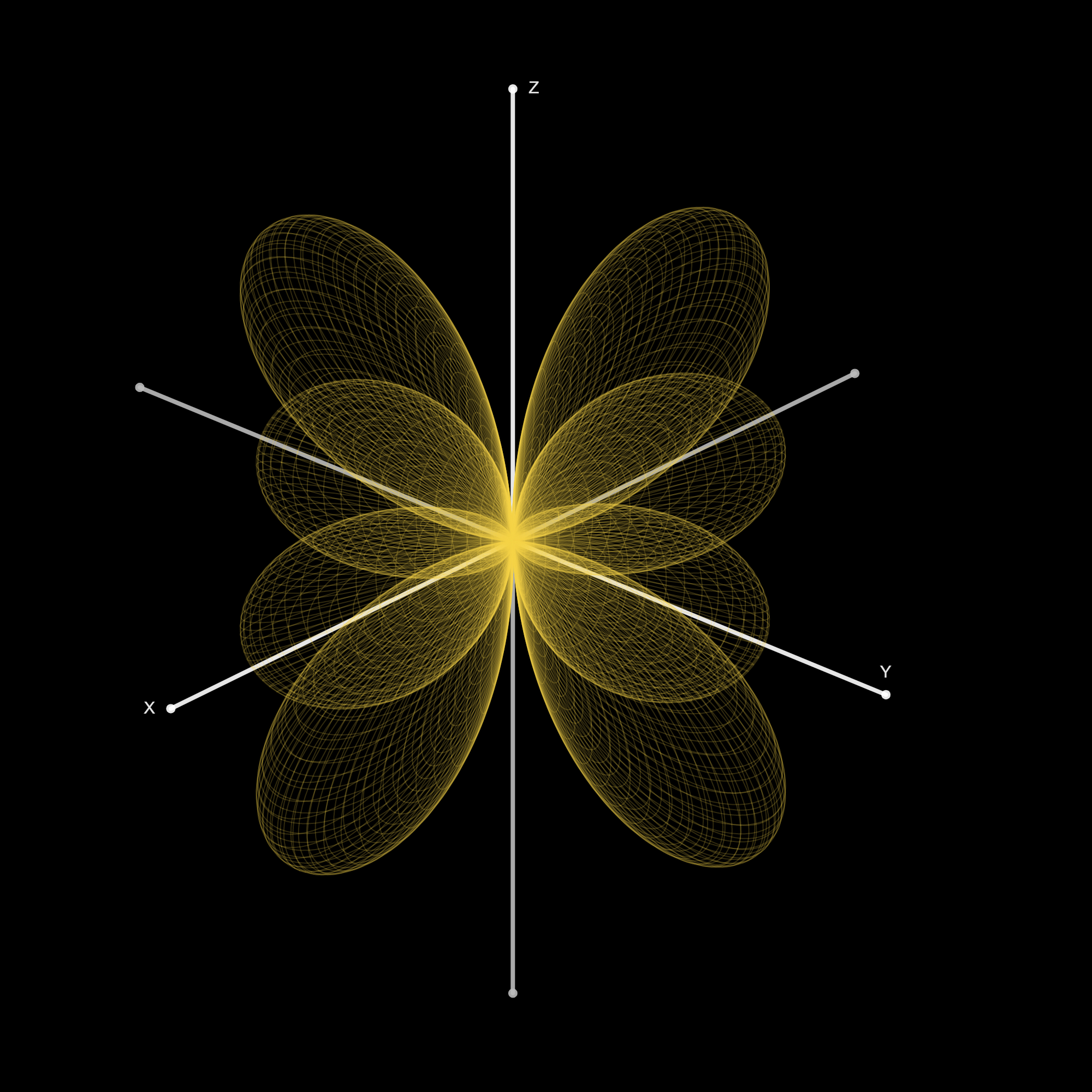
Mathematical Physics had arguably the longest problem sets out of any physics course I’ve taken. The average question took 1–1.5 pages of writing, and each assignment would take anywhere from 10–20 hours of work. We covered a broad range of topics, from simple series solutions, to seperation of variables, using sturm-liouville theory to solve problems with spherical and cylindrical symmetry (where we had to manipulate lots of Legendre Polynomials, Spherical Harmonics, and Bessel functions) where most problems were represented in a general series form. We then ended with Complex analysis. I found this course really interesting, but many problems from the assignments required extensive research in-order to solve them. Concepts such as the Frobenious’s method, recursion relations, Legendre Polynomials, Spherical Harmonics, and Bessel functions were particularly challenging. I’m still confused by what they mean conceptually and their general applications, which is why I’m doing some self learning this summer to try and break them down further. Modern Physics II was more of a frustrating course. It consists of arguably the most interesting content of all our physics course, but the delivery was pretty crap. The curriculum consisted of Quantum Mechanics (GM) of the Hydrogen Atom, QM of the periodic table, QM of bonds, energy bands, Fermi energy, some cosmology, and nuclear physics. The homework assignments were long and relatively simple, they mostly consisted of online research as our course content didn’t provide us enough information to solve the problems. The lab component consisted of 2 experiments. The first on Electron & Proton Spin resonance. I still barely understand the theory behind this experiment, and want to further explore its meaning this summer. Overall the way we represent spin in QM, especially using linear algebra, still really confuses me. The second experiment was on Gamma-Ray Spectroscopy, which was an experiment that required being quite thorough, but I found the theory to be interesting and relatively digestible. We also had a lab presentation for this experiment that I somewhat enjoyed preparing for.
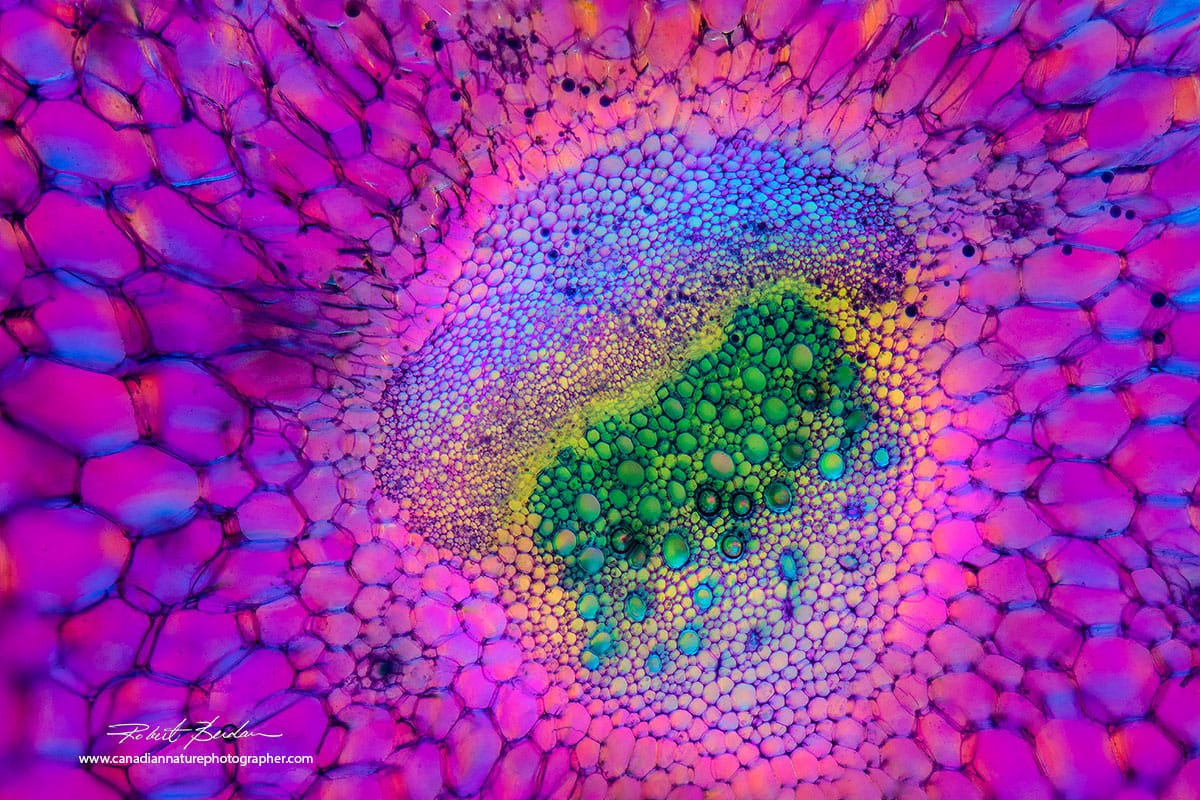
On the biology side of things I took a Plant form & function course in my first semester. This is one of my favorite courses I’ve taken in university. The professor was fantastic, and I was surprised to learn how ignorant I’d been about plants. Getting to explore the resiliency, robustness, and creativitiy in plant biology was fascinating. Not to mention the complexity and importance of understanding plant photosynthesis for the future of sustainable energy. In the lab component of this course we got to stain and analyze the individual cells of plant cross-sections, which was pretty cool. Each plant and cross-section mixed with dye looks like a piece of art carefully crafted by nature.
In my second semester I took Genetics with the same professor, which was a somewhat conceptually difficult course. The system of processes that makeup the replication, and transcription of DNA, followed by the translation of mRNA is unbelievably complex. There are so many mechanisms of regulation within this core cellular language, which is why so many biology students struggle to learn the content. I’m excited to take more in-depth genetics courses in the future. I also took a Natural History of Ontario course taught by a legendary naturalist Mike Runtz. This course fed my soul throughout semester. We explored all the geography, and flora & fauna of Ontario. From the actic, Hudson bay lowlands, boreal forest, Algonquin park, Great-Lakes St Laurence region, to the Carolinian. No course has ever made me want to go backpacking as bad as this one. I have to go to algonquin park this summer because of it… this course really made me further appreciate the magic of nature.
My first semester was further challenged by my first romantic heartbreak. For the first time in my life I had to really learn how to grieve, regulate, and cope with overwhelming emotions. To say the least, this consumed my headspace for most of the school-year. I learned that journaling is a vital tool for exploring personal feelings, beliefs, insecurities, and underlying psychological mechanisms. Additionally, hot baths, and running really helped me process everything going on in my mind & body. Even through all the pain, I learned that heartbreak is a difficult, yet important, opportunity for self-discovery and understanding.
Tips & Lessons
As done in past year, I’m going to break up the key lessons I learned from this school year into sections listed in the table of contents.
Educational Journey
Lesson #1
Commit to that thing, that path, that class you know you should do. You want to do it, but you’re reluctant because it’s harder, it’s unconventional, and nobody else is doing it. Which is exactly why you should do it. Develop into your own person by following your own path.
I changed my major once again, from a general physics major with a minor in Biology, to a double honours major in Physics & Biology. I didn’t do this before because it required me to take chemistry, biochemistry, and several intense higher level biology courses. But then two things threw me over the edge. Towards the end of my second semester I was reading “One River” by Wade Davis, covering the stories behind 50 years of botanical adventures in the Amazon. The beauty of plant biochemistry really spiked my interest, and I developed this intellectual envy for never taking university chemistry. Secondly, I watched a documentary on the work done at OXMAN, a company at the forefront of biomimicry, bio-integration, and a nuanced approach to sustainable design & technology. From using biopolymers to make functional & beautiful infrastructure, to the use of silk-worms to weave campuses guided in design by AI. To say the least, I was inspired, and realized how heavily the development of a sustainable society relies on innovations in biochemistry. Hence, my double major was born. It will take longer, and be more challenging. I’ll also have to fight administrators to allow me to deviate from the conventional course path. But it will feed by passion and get me closure in working towards a truly sustainable future.
Lesson #2
“Get in” with a prof or researcher as soon as possible
In the past I’ve regreted not showing up to office hours and connecting with my professors. Not only is there potential for interesting conversations & insights during these meetings, but it creates a connection that opens opportunities. Opportunities for research, employment, exploring your curiosity, or learning what path you want to take. I personally want to be better about this in the future, and I want to touch base with some of my favourite past professors.
Study Lessons
Lesson #3
Don’t study with people (plural), but study with someone (singular)
I personally find studying with more than one person too distracting. Especially in physics, where your brain has to be completely isolated and focused on one task. I prefer finding one person, around the same level of understanding/performance as me, and do what I call “touch-base” studying. This consists of studying independently for around 80% of the time, then for the other 20% of the time either meeting up in person or via facetime to discuss answers, problem-solving steps, struggle spots, and interests. The vast majority of the time “group-studying” is just a normal hangout disguised as studying. I prefer to discretely separate my studies and hang-out time to decrease procrastination.
Coping & Self-Care
Ever since 11th grade of highschool I’ve been under extreme academic stress. Some imposed by my own expectations, the rest from rigorous programs and course-loads. I started the IB program in 11th grade at the peak of COVID in 2020. Following that, I’ve completed 3 years of university as a physics major. These 5 years have consisted of considerable academic stress. This past academic year was no different, but it did consist of unique challenges. Firstly, I worked part-time as an academic tutor. Secondly, I focused more on living responsibly (via cooking & handling my own financials). Lastly, I had to learn how to cope with my first heartbreak. Since I’m quite a head-on person, this meant learning how to grieve, cry, process emotions, understand my sensitivities, and understand the evolution of my attachment systems… etc. In short, my academics weren’t the only thing requiring alot of time and energy. Below I’ve listed a couple lessons that helped me overcome and/or cope with these challenges.
Lesson #4
Work your body to free your mind
In my first semester I used long-distance running to cope with the darkness of emotional turmoil and academic stress. For me, running and other forms of endurance exercise are a way to attain respect for myself. Additionally, it seems to melt away stress, and the residual sluggishness that comes with lots of sedentary studying. During this period, it not only helped me connect, process, and regulate my emotions, but it allowed me to temporarily enter a state of peace. After 30 minutes into a run, I enter the runners high. It’s a synergy between physical exertion and clarity of mind. Find some physical activity that allows you to recalibrate into a peaceful state of mind. It’s life-changing.
Lesson #5
Stress management, self-soothing, relaxation, and healthy doses of pleasure are essential but not always easy
This was the first school-year where I payed alot of attention towards managing stress, difficult emotions, and intentionally relaxing. My go-to stress management activities were:
- Good sleep (9+ hours, mainly achieved by going to bed extra early)
- Exercise, especially cardio
- Breath-work (I like the Wim Hof method and breath-hold tables)
- Evening walks
- Journalling
- Hot baths (with a bit of Epson salts)
The last two are typically accompanied by a nice cup of tea. For me, I get a healthy dose of pleasure from:
- Fun hangouts with friends (usually sports or outdoors related)
- Rock Climbing
- Breath-work
- Singing & playing music
- Reading a good book
- Eating a hearty meal & sometimes cooking it (with the right tunes)
- Stillness & contemplation
For me, the hardest part is mastering the transition from work or stress into these genuinely peaceful and soul-feeding activities, instead of getting stuck rotting away on my phone. The doom scroll is truly a doom, and you become more vulnerable to it the shittier your state of mind. So list your best stress management & pleasure activities, and master your ability to transition into them whenever you’re tired and/or stressed.
Lesson #6
Diversify your Outlets
During the school year I often get the feeling of being trapped in an intellectual prison. Often the only way out of this feeling is through some outlet. I suggest always having minimum 1 exercise, creative, and social outlet during every semester. For me, sometimes my exercise & social outlets go together which is great. Here are some examples of my outlets:
- 1 exercise outlet (Running, triathlon training, calisthenics, rock climbing, skiing)
- 1 creative endeavour (Article writing, music, cooking, baking)
- 1 social endeavour (Run-club, climbing gym… any consistent club or meetup)
Rock climbing has been a fantastic outlet the past couple of years. It’s great exercise and you end up meeting some really cool people. Additionally, I recently joined a run club which has been awesome. This past school year my 2 main outlets were running & music. I pulled away slightly from social endeavours until the end of the school year. And honestly those outings, mainly the climbing gym and run club, are the highlights of my week. So find outlets, those special forms of expression, because they are essential to your well-being as a human.
Alrighty, that wraps up my 3rd year experience and lessons. I hope you enjoyed the read. If there’s anything that particularly resonated with you, or that you want to build on top of, please comment it down below. Constructive criticism is always welcome :).